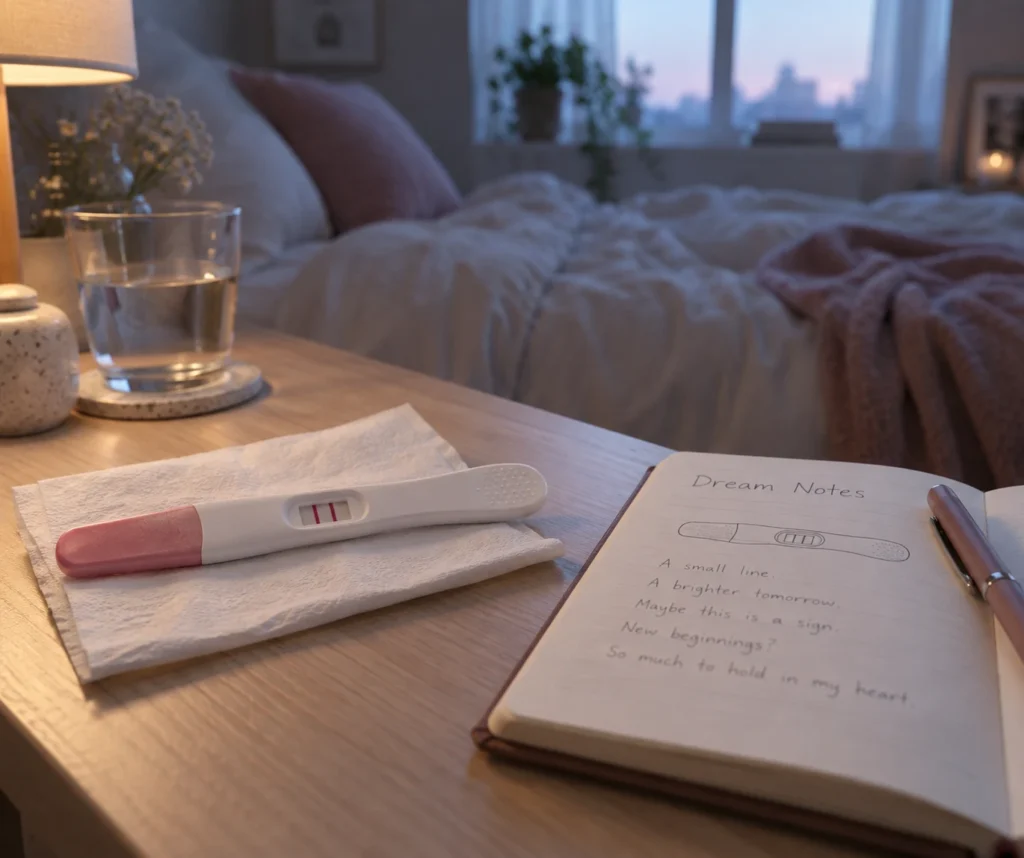
Dreaming about a positive pregnancy test may reflect hopes or worries about pregnancy, a new responsibility, or uncertainty about a developing change. The dream cannot confirm pregnancy or predict what happens next. Your feelings in the dream and your current circumstances offer better clues than any fixed meaning.
The test itself matters, too. You’re seeing an answer to a question, rather than simply seeing a pregnancy. That detail may connect with wanting certainty or fearing that something is becoming real. Sometimes, though, recent pregnancy concerns explain the dream without any deeper symbolism.
Your reaction gives you the strongest clue
Feeling happy, scared, or confused changes how you might understand the same positive result. Start with your emotional response before deciding what the pregnancy test means.
Happiness may reflect hope or relief
If you felt happy, you may be imagining a wanted pregnancy or welcoming another change. For example, a positive result could fit the relief you hope to feel after a job interview.
Notice whether your joy came from the pregnancy itself or from finally knowing. Feeling relieved after a long wait points more toward a wish for certainty than toward parenthood.
Fear may reflect pressure or lost control
If you felt scared, ask what seemed threatened: your plans, privacy, relationship, finances, or freedom. A positive result may bring those concerns into a single, clear image.
A positive result doesn’t always mean good news in a dream. You can want children and still fear the responsibility. You can also feel happy during the dream and worried after waking. Neither reaction proves a hidden wish or tells you what choice you should make.
Recent pregnancy concerns may explain the dream directly
If you’re trying to conceive, waiting for your period, or worried about pregnancy, you may not need a symbolic explanation. Dreams often draw on concerns, memories, and emotions from waking life.
When you’re trying to conceive, tracking your cycle and waiting to test can keep the subject on your mind. A dream may give you the hoped-for answer or repeat the uncertainty you already feel. It doesn’t show whether conception occurred.
After a pregnancy loss or fertility treatment, the image may carry hope and grief together. You don’t have to turn that experience into a message about the future.
A home pregnancy test checks your urine for hCG, a hormone produced during pregnancy. A dream does not measure that hormone.
If pregnancy is possible, use an actual pregnancy test, rather than interpreting the dream as evidence. Follow the package directions and test after your period is due. If the result is negative but your period hasn’t arrived, repeat the test after a few days. Testing too early can give a negative result before enough hCG is present.
The test may symbolize confirmation, not parenthood
If pregnancy hasn’t been on your mind, consider what a test does: it turns uncertainty into an answer. That makes confirmation a useful possible meaning, especially when you’re waiting for something in waking life.
A positive result can make a change feel real
You may already sense that a relationship, project, or decision is developing. The positive test could fit the moment when you can no longer treat that change as only an idea.
For example, accepting a promotion turns a possible role into a real responsibility. The connection is strongest if the dream’s excitement or pressure matches how you feel about the job.
Pregnancy can suggest something that needs care
A new business, course, or caregiving role can require steady attention before you see results. You might connect the pregnancy image with that slow development.
This reading can fit even if you don’t want children. Dreaming about pregnancy doesn’t establish a hidden desire to become a parent. Your mind can use a familiar image without expressing a literal wish.
Spiritual meaning depends on your beliefs
If spiritual reflection matters to you, you might read the dream as an image of growth, patience, or a new beginning. Keep that reading personal rather than treating it as an established fact.
Ask whether it helps you understand a present concern. A meaningful interpretation doesn’t need to become a prediction of pregnancy, good fortune, or a future event.
Someone else’s result and recurring dreams need context
Who holds the test, who sees it, and whether the scene repeats can shift your interpretation. These details are useful when you connect them with real situations, rather than assigning each one a fixed meaning.
Someone else’s positive test may reflect your relationship
If your sister, friend, or partner shows you a positive test, focus on your reaction to their news. You may feel close to them, fear a change in your relationship, or compare your progress with theirs.
For example, dreaming about a friend’s result after their real pregnancy announcement may simply reflect that recent conversation. It doesn’t reveal whether someone is secretly pregnant.
Repeated dreams may revisit an unresolved question
Recurring pregnancy test dreams can return while the same hope or worry remains active. Repetition doesn’t make the dream more predictive.
Write down these four details after waking:
Your first feeling: joy, fear, relief, disappointment, or something else.
Who was present: especially anyone whose reaction mattered to you.
What happened next: hiding the test suggests a different concern than sharing it.
What you’re waiting on: a period, a decision, an answer, or a change.
Compare those details across several dreams. If the setting changes but you always fear telling someone, their judgment may be the more useful theme to examine. If the dreams follow days spent tracking fertility, that direct connection may explain more than a symbolic reading.
Frequently Asked Questions
Does dreaming about a positive pregnancy test mean I’m pregnant?
No. A dream cannot tell you whether you’re pregnant, even if it feels unusually vivid. If pregnancy is possible, take a home pregnancy test according to its directions. A vivid memory is not a medical result.
What if I don’t want children but felt happy in the dream?
Feeling happy doesn’t prove that you secretly want children. Your happiness may relate to certainty, feeling supported, or welcoming a different change. Look at what felt good in the scene rather than treating the emotion as a decision about parenthood.
What does a faint positive line mean in a dream?
A faint line may fit uncertainty, especially if you kept checking it or asking someone what it meant. It could also come from remembering real test images. In a dream, line darkness has no medical meaning.
Ella Stone is a writer and dream researcher with a passion for uncovering the hidden meaning behind what we see in our sleep. She’s spent years studying dream patterns and symbols, making complex ideas feel simple and relatable. When she’s not writing, you’ll find her journaling her own dreams or reading about ancient sleep traditions.